

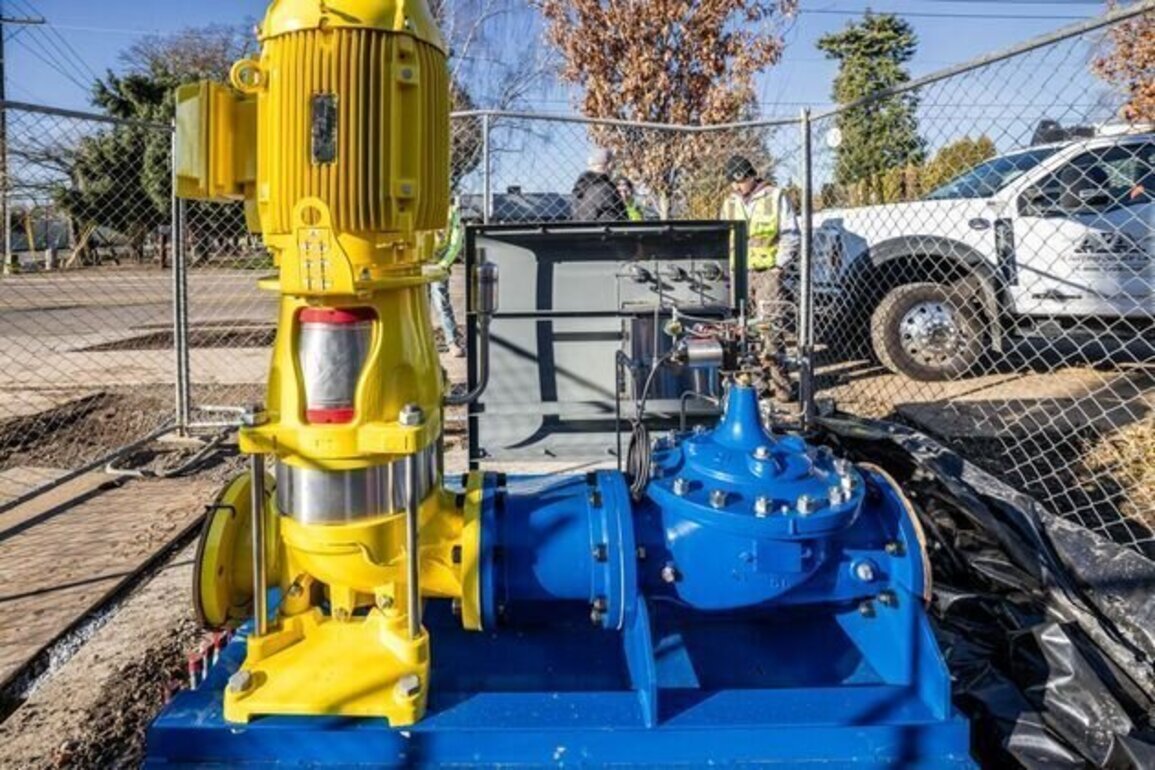
The city of Tualatin is installing a new micro hydro turbine it said will save money and boost the city's energy resilience.
The turbine is replacing an existing valve which reduces pressure in the city's water distribution system. It uses the excess pressure and flow of water through the system to create energy.
Nic Westendorf, deputy public works director for the city of Tualatin, said the electricity will be used to power the City Services Center. He added the project is a step in the city’s plan to reach net-zero emissions by 2050.
"I hope our project can serve as an example of both how this can be integrated into the water system without impacts to the water customers and to showcase the funding and partnership opportunities to get these designed and in the ground," Westendorf emphasized.
Westendorf pointed out the biggest hurdle was funding but the city was able to pay most of the project's near-million-dollar price tag through grants, incentives and tax credits from Portland General Electric, the Oregon Department of Energy, and Energy Trust of Oregon.
Dave Moldal, senior program manager for the Energy Trust of Oregon, said one of his organization’s goals is to make renewable projects financially viable. He added the hydro turbine will be paid off in about seven years and is expected to save the city about $14,000 a year in electricity costs.
"This hydro turbine, well maintained, is going to operate for 50 to 100 years in the future," Moldal noted. "They're creating a piece of equipment that has significant economic returns for the community."
Beyond lowering bills, Moldal argued the city is building long-term energy resilience. Energy Trust is exploring pairing the hydropower turbine with a microgrid, battery storage and possibly some solar capacity, so Tualatin could eventually generate and manage its own power during outages.
Moldal stressed the project shows every community can contribute to renewable energy.
"It benefits all ratepayers, it benefits the utilities, it benefits our communities, makes our communities more resilient and, of course, advances our clean energy future," Moldal outlined.