

(CN) - A Ninth Circuit panel on Tuesday freed Oregon to enforce its Prescription Drug Price Transparency Act of 2018, which will require pharmaceutical companies to disclose certain information about when their drug prices change and why.
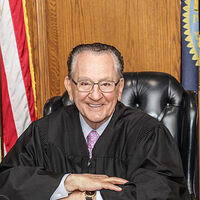
"The pharmaceutical drug market is characterized by significant informational asymmetries," U.S. Circuit Judge Lucy Koh, a Joe Biden appointee, wrote for the majority in a 114-page ruling. "The state has a substantial interest in reducing those asymmetries, facilitating informed commercial transactions, and improving the efficiency of the pharmaceutical market."
The Pharmaceutical Research and Manufacturers of America, a trade group representing drug companies like Eli Lilly, Gilead and Bayer, sued Oregon in 2019, arguing that the reporting requirements in the drug price transparency bill, HB 4005, amounted to compelled speech and thus violated the First Amendment. The group also argued the law would force companies to divulge trade secrets in violation of the takings clause of the Fifth Amendment.
In 2024, U.S. District Judge Michael Mosman, a George W. Bush appointee, sided with the drugmakers and granted their motion for summary judgment. He found Oregon had failed to show how the law would directly advance its legislative goals, and the law's disclosure requirements could be considered "a regulatory taking."
"Unless just compensation is provided, a taking of private property for public use occurs with each mandated public disclosure," Judge Mosman wrote.
Oregon appealed the ruling.
On appeal, the Pharmaceutical Research and Manufacturers of America argued that being forced to disclose the reason for a price rise was in effect calling for an opinion "about the reasons for high prescription prices," and that the disclosure would "reinforce the state's message that manufacturers are the ones responsible for drug prices." But the three-judge panel disagreed, with Koh writing that the factors a company considers when setting the price of their drugs are "a matter of historical fact."
"If, for example, a manufacturer raises the price of a drug to mitigate rising manufacturing costs, fund future research and development, offset a tax hike, or comply with new regulatory requirements, it remains entirely free to explain the impact of these economic pressures on the drug's price," Koh wrote.
The panel found that the disclosures were commercial speech, which is subject to more regulation than political speech and artistic expression.
"That HB 4005 calls for the reporting of some information that may reflect internal decision-making also does not dissuade us from categorizing the reporting requirement as commercial speech," Koh wrote.
Mosman had concluded Oregon failed to show how HB 4005 would lower the cost of prescription drugs in the state. But the Ninth Circuit found that that wasn't the goal of the Legislature. Rather, the point the of the law was to "reduce information asymmetries in the pharmaceutical market and provide drug purchasers with leverage in negotiations with manufacturers."
In other words, Koh wrote, it was "a permissible regulation of commercial speech."
U.S. Circuit Judge Carlos Bea, a George W. Bush appointee, issued a strongly worded dissent, writing the forced disclosure amounts to compelled non-commercial speech "because detailed pricing strategies are not akin to anything people would otherwise disclose in proposing commercial transactions."
"I am not prepared to countenance a government that can compel an unwilling speaker to speak simply because the government and some others, for their own economic or political interests, would like to hear," Bea wrote.
U.S. Circuit Judge Jennifer Sung, a Biden appointee, rounded out the panel.
In an email, a spokesman for the Pharmaceutical Research and Manufacturers of America called the ruling "disappointing."
"The lower court correctly found that forcing manufacturers to disclose trade secrets without compensation is unconstitutional and compelling companies to speak on a controversial topic violates the First Amendment," the spokesman wrote. "We are reviewing the decision and evaluating next steps."
Oregon attorneys did not respond to an email requesting a comment.
Source: Courthouse News Service